Liposuction Farmington Hills: Is It the Right Body Contouring Option for You?
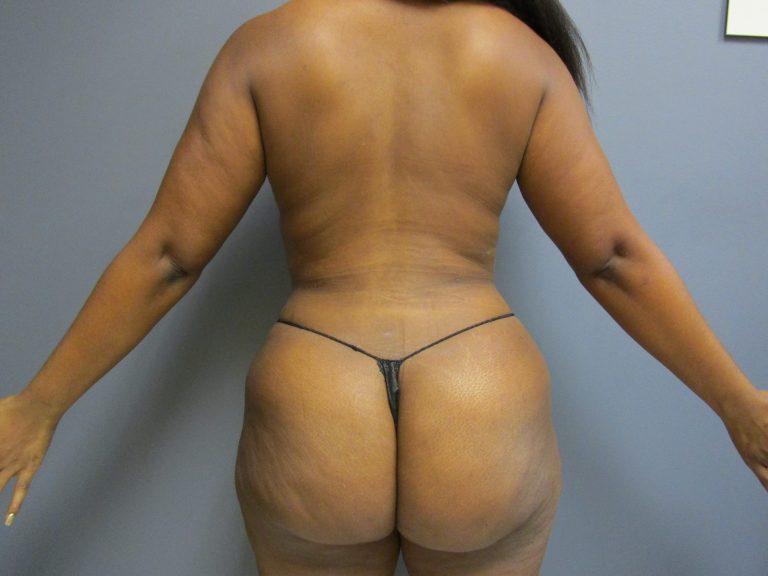
Body contouring decisions rarely come down to vanity alone. Most people who ask about liposuction have already spent months, sometimes years, trying to change a specific area that refuses to respond. They may be close to their goal weight, active several days a week, and eating reasonably well, yet still feel frustrated by fullness at the abdomen, flanks, thighs, upper arms, or under the chin. That frustration is real, and it is one of the most common reasons people start exploring Liposuction Farmington Hills consultations.
Liposuction can be a very effective tool, but it is also one of the more misunderstood cosmetic procedures. Some patients arrive expecting dramatic weight loss. Others assume recovery is either trivial or overwhelming, with nothing in between. The truth sits in a more practical middle ground. When used for the right person, on the right area, with realistic expectations, liposuction can create a noticeably improved shape. When used for the wrong reasons, it tends to disappoint, even if the surgery itself goes well.
The better question is not whether liposuction works. It does. The real question is whether it fits your anatomy, your goals, your timeline, and your willingness to recover properly.
What liposuction actually does, and what it does not
Liposuction removes pockets of fat from targeted areas through small incisions using a thin tube called a cannula. That description is simple, but the planning behind it is not. Good contouring depends on where fat is removed, how much is removed, the quality of your skin, and how your body is likely to contract and settle afterward.
It helps to understand what liposuction is designed to solve. It is best for localized fat deposits that create disproportion or blur natural body lines. A lower abdomen that projects more than the upper abdomen, love handles that push against clothing, inner thighs that rub, or a bra-line roll that remains despite weight stability are classic examples. These are contour problems, not scale problems.
Liposuction does not tighten loose skin in a meaningful way. It also does not repair separated abdominal muscles after pregnancy, and it is not a treatment for obesity. If the main issue is skin laxity, especially after major weight loss or multiple pregnancies, removing fat alone can make loose skin more obvious. That is one of the most important realities patients need to hear early, before they become emotionally attached to the idea of a quick fix.
A patient might say, “I want my stomach flatter.” That can mean several different things. In one person, the problem is a modest layer of pinchable fat above otherwise firm tissues. In another, it is skin excess, muscle laxity, and a small amount of fat. The first person may do very well with liposuction. The second may be happier with an abdominoplasty, sometimes called a tummy tuck, with or without liposuction as a complement.
The strongest candidates tend to share a few traits
The people happiest with liposuction usually have a stable weight, decent skin elasticity, and one or more stubborn areas that feel out of proportion to the rest of the body. They also understand that contouring is about refinement, not reinvention.
Age matters less than tissue quality. A fit person in their fifties with good skin tone may be a stronger candidate than a younger person whose skin has significant stretch or looseness. Weight matters, but not in the way many people assume. There is no universal “perfect weight” for liposuction. What matters more is whether your weight is reasonably stable and whether the amount of fat you want removed is localized.
A useful practical benchmark is this: if your shape bothers you more than your actual weight does, liposuction may be worth discussing. If you are primarily focused on dropping a large number of pounds, other medical or lifestyle approaches usually make more sense first.
The consultation should also include an honest look at your medical history. Smoking, uncontrolled diabetes, clotting issues, major fluctuations in weight, and certain medications can change whether surgery is advisable or how recovery should be managed. These are not small details. They can directly affect healing, swelling, and final contour.
Areas that often respond well
Some body areas consistently do well with liposuction because the fat is discrete and the surrounding skin can often redrape nicely. The abdomen and flanks are obvious examples, but they are not the only ones. The outer thighs, inner thighs, upper arms, back, submental area under the chin, and in some cases the chest can be treated effectively.
Men and women often present with different goals. Men commonly ask about the waist, lower abdomen, and chest. Women often focus on the abdomen, flanks, thighs, arms, and the area around the bra line. Still, patterns vary widely. The best results come from looking at the body as a whole rather than treating one isolated bulge in a vacuum.
For example, removing a small amount from the flanks can sometimes improve the waistline more than taking a larger amount from the central abdomen. Similarly, subtle contouring under the chin can make the jawline look sharper even when the actual amount of fat removed is modest. These are the kinds of proportional decisions that matter more than dramatic sounding volume numbers.
Why skin quality changes everything
If there is one factor patients routinely underestimate, it is skin behavior after fat removal. Fat can be taken away, but skin has to shrink to match the new shape. Sometimes it does that beautifully. Sometimes it contracts only partially. Sometimes it barely contracts at all.
Pregnancy, age, sun damage, genetics, and major weight loss all affect elasticity. So does where on the body the skin sits. Under-chin skin often behaves differently than lower abdominal skin. Upper arm skin can be particularly unpredictable. Inner thigh skin can be another trouble spot, especially if there is already looseness before surgery.
This is where a careful surgeon earns trust by being candid. If you are told liposuction will “tighten” clearly loose skin without any nuance, it is worth asking tougher questions. In real practice, mild skin laxity may improve somewhat after liposuction, but moderate to severe laxity usually does not disappear. Sometimes the right recommendation is a different procedure. Sometimes it is no procedure yet, especially if weight is still changing.
The consultation should feel specific, not scripted
A worthwhile consultation for Liposuction Farmington Hills patients should not sound like a one-size-fits-all sales pitch. It should feel tailored to your body and your priorities. A surgeon should evaluate how you stand, where you carry fat, how your skin moves, how you describe your goals, and whether those goals are technically reasonable.
You should leave understanding what can likely improve, what may only improve somewhat, and what will not change. If your Aesthetic Plastic Surgery & Laser Center Liposuction Farmington HIlls expectation is a perfectly flat stomach after childbirth, and you have skin redundancy and muscle separation, liposuction alone is unlikely to deliver what you picture. That does not mean there is no solution. It means the right solution may be different from the one you originally had in Liposuction Farmington HIlls mind.
The most productive consultations often include a conversation about clothing rather than just measurements. Patients tend to describe outcomes in practical terms. They want pants to sit better at the waist, fitted shirts to skim instead of cling, swimsuits to feel less exposing, or exercise clothes to look smoother. Those details reveal priorities more clearly than abstract statements about “wanting to look toned.”
Different techniques, same core goal
There are several liposuction techniques in use today, including tumescent liposuction, ultrasound-assisted approaches, laser-assisted approaches, and power-assisted methods. The technical differences matter, but they do not automatically determine who gets the best result. Surgical judgment and appropriate case selection matter at least as much as the device used.
Tumescent technique remains a foundation in many practices. Fluid containing anesthetic and medications is placed into the treatment area before fat removal. This helps with comfort, bleeding control, and fat extraction. Power-assisted liposuction uses a vibrating cannula that can make fat removal more efficient in certain areas. Ultrasound-assisted or laser-based systems may be useful in selected situations, but they are not magic shortcuts.
Patients can get overly focused on the brand name or technology because it sounds objective. In reality, a surgeon’s plan for your body matters more than a brochure description of equipment. The better question is not “Which machine do you use?” but “Why is this technique appropriate for my anatomy and goals?”
What recovery actually feels like
People often fear recovery because they imagine either severe pain or complete incapacity. Most recoveries fall somewhere between soreness and fatigue rather than sharp, unmanageable pain. The treated areas usually feel bruised, swollen, and tender. Many people describe it as the deep ache you might feel after an unusually hard workout, combined with tightness and stiffness.
Compression garments are commonly part of the process. They help manage swelling and support the tissues while the body adjusts. Swelling can be surprisingly persistent, and this is a point that catches many patients off guard. You may look different quickly, but you will not see your final contour right away. Early changes are encouraging, yet the body continues to settle for weeks and often months.
Here is the recovery pattern many patients experience:
- The first few days are the most restrictive, with soreness, drainage from tiny incisions, and limited energy.
- By the end of the first week, many people are moving more comfortably and returning to lighter daily tasks.
- Over the next few weeks, bruising fades, swelling gradually decreases, and shape becomes easier to evaluate.
- Exercise usually returns in stages rather than all at once, depending on the extent of treatment and your surgeon’s guidance.
- Final refinement takes patience, especially in areas prone to lingering swelling such as the lower abdomen or flanks.
That timeline varies by the volume removed, the number of areas treated, and whether liposuction was combined with another procedure. Someone who has a small amount taken from the chin or flanks may feel ready to resume routine activities relatively quickly. Someone having multiple body areas treated will usually need a more deliberate recovery.
The emotional side of the healing period
Recovery is not just physical. There is an emotional dip that many patients are not prepared for, even when surgery goes exactly as planned. Swelling distorts the shape before it reveals it. Bruising can make you look worse before you look better. Clothes may fit oddly during the transition. If you expect instant polish, the middle phase can feel discouraging.
This is normal, and it helps to know that beforehand. The body is healing in layers. Early swelling can mask the very contour changes you wanted most. That is one reason surgeons often stress that patience is not optional. It is part of the treatment.
The patients who handle recovery best tend to be the ones who plan for it realistically. They schedule lighter commitments, prepare comfortable clothing, stay hydrated, walk when advised, and accept that the mirror will not tell the whole truth during the first few weeks.
Risks deserve plain language
Any surgical procedure carries risk, and liposuction is no exception. The common issues are usually manageable, such as bruising, swelling, temporary numbness, firmness, or asymmetry during healing. Less common but more serious risks include contour irregularities, infection, fluid collections, blood clots, and anesthesia-related complications.
Contour irregularity is the risk most relevant to the final aesthetic result. If too much fat is removed unevenly, or if the skin does not redrape well, the area can look lumpy, rippled, or overtreated. This risk increases in patients with poor skin elasticity and in revisions, where scar tissue complicates the anatomy.
That is why restraint can be a sign of expertise. Patients sometimes ask for maximum removal, but more is not always better. A smoother, balanced contour usually beats aggressive extraction that creates hollows or waviness. Surgical finesse often means knowing when to stop.
How liposuction compares with non-surgical body contouring
Non-surgical treatments appeal to many people because they avoid incisions and downtime. Depending on the device, they may use cooling, heat, radiofrequency, or other energy to reduce small amounts of fat or improve mild skin laxity. For the right patient, these treatments can be worthwhile. The challenge is that they are typically subtler and less predictable than liposuction.
If you have a very small isolated pocket and strongly prefer no surgery, a non-surgical option may be reasonable. If you want a meaningful reduction in fullness across the abdomen, flanks, or thighs, liposuction usually provides a more visible and controllable change. That is not a criticism of non-surgical technology. It is simply a matter of scale.
A useful way to think about it is this. Non-surgical body contouring is often best for fine-tuning. Liposuction is better for reshaping. When expectations are aligned with that difference, patients make better choices and are less likely to feel let down.
Cost, value, and what patients should really be asking
The price of Liposuction Farmington Hills can vary significantly based on the number of areas treated, the surgical setting, anesthesia, and the complexity of the case. There is no honest single number that fits every patient. A small focused procedure is different from multi-area contouring, both technically and financially.
Patients naturally compare quotes, but price alone can be misleading. A lower fee may reflect less comprehensive care, less operating time, or a plan that does not truly address the problem. A higher fee is not automatically a mark of quality either. The real value comes from good judgment, safe execution, and an outcome that matches the conversation you had before surgery.
Instead of focusing only on cost, ask questions that reveal how the practice thinks:
- What result is realistic for my body, not an idealized example?
- Is skin laxity likely to limit my outcome?
- How much downtime should I honestly plan for?
- What happens if I have prolonged swelling or concerns during recovery?
- Would another procedure address my goals better than liposuction alone?
Those questions often tell you more than any pricing sheet.
When liposuction is a strong choice, and when it is not
Liposuction tends to be a strong option when the issue is shape rather than overall body size. It also works best when the treatment target is clear. A patient with stable weight, good skin quality, and localized lower abdominal or flank fullness often gets a satisfying change because the problem is precise and the correction can be precise too.
It is a weaker choice when a patient expects surgery to solve multiple unrelated concerns at once. If you want firmer skin, repaired muscles, major weight loss, and a dramatically different silhouette, liposuction alone is unlikely to check all those boxes. It may still play a role as part of a larger surgical plan, but it should not carry expectations it was never designed to meet.
There is also the issue of timing. If you are actively losing weight, planning pregnancy, recovering from a recent major life event, or unable to step back from work long enough to heal properly, waiting may be smarter. Surgery generally goes better when life is stable enough to support recovery.
A few real-world examples of who tends to be happy
Consider the patient who is ten to fifteen pounds from where she would like to be, but her waist and lower abdomen still feel bulky despite regular strength training. Her skin is fairly firm, she is done having children, and her weight has been stable for a year. She often does well because the goal is contour refinement, not a full-body transformation.
Now consider a man whose weight fluctuates by twenty pounds every year and who wants liposuction to “kick-start” a health reset. That situation is less ideal. Even if the procedure technically removes fat, the long-term satisfaction may be poor if lifestyle and weight remain unstable.
Then there is the post-pregnancy patient whose main complaint is a lower belly pouch. If the exam shows separated abdominal muscles and stretched skin, liposuction alone may leave her disappointed. A tummy tuck, sometimes with adjunct liposuction, could be the better match. Same complaint on the surface, very different underlying anatomy.
That is why experienced assessment matters so much. The procedure should fit the problem, not just the patient’s first guess about what they need.
How to know you are ready to move forward
Readiness is partly medical and partly practical. You are more likely to feel good about your decision if you can answer yes to most of the following questions in your own mind: is my weight relatively stable, are my goals focused, do I understand that this is contouring and not weight loss, and can I give recovery the time and patience it requires?
It also helps if you can describe your goal in concrete terms. “I want my waist to look smoother in fitted clothes” is clearer than “I just want to look better.” Specific goals make it easier for a surgeon to tell you whether liposuction is likely to help.
A consultation for Liposuction Farmington Hills should leave you with a sharper sense of fit, not just enthusiasm. If the recommendation feels measured, individualized, and honest about limitations, that is usually a good sign. Cosmetic surgery decisions go best when optimism is matched by realism.
Liposuction is not the right answer for everyone, but for the right patient it can be a highly effective way to remove stubborn fat and improve proportion. The key is choosing it for the right reason, at the right time, with a clear understanding of what it can and cannot do. When those pieces line up, body contouring feels less like a gamble and more like a well-considered next step.
Aesthetic Plastic Surgery & Laser Center, Michelle Hardaway M.D.
27920 Orchard Lake Rd
Farmington Hills, MI 48334
(248) 221-1957
FAQ About Liposuction Farmington Hills
What disqualifies you from getting liposuction in Farmington Hills?
A surgeon may recommend postponing or avoiding liposuction if a health condition, medication, or nicotine use raises the risk of surgery or poor healing. A consultation is needed to assess your medical history and whether the procedure fits your goals.
Can liposuction remove 20 pounds?
Liposuction is a body contouring procedure for localized fat. It is not a weight loss treatment, and a specific number of pounds is not a safe or useful target. The surgeon determines how much can be removed safely for each patient.
What are the risks of liposuction?
Risks include infection, changes in sensation, uneven contours, and complications from anesthesia or blood clots. A plastic surgeon can explain which risks apply to you and what to expect during recovery.